AI Engineer · July 31, 2026

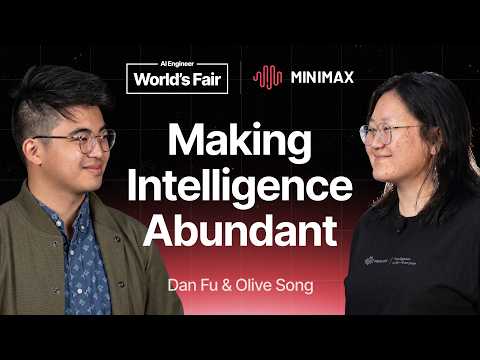
Agents at Scale: Inside MiniMax's Model and the Infrastructure Behind It — Olive Song

Agents at Scale: Inside MiniMax's Model and the Infrastructure Behind It — Olive Song video thumbnail
Why it matters

In this conversation, Olive Song, who leads reinforcement learning at MiniMax, opens up the stack behind the company's open weight models and the infrastructure that serves them. Her starting point is a belief in open source: put the weights out, let builders optimize on them, and share the capability widely.

My takeaway: Agents at Scale: Inside MiniMax's Model and the Infrastructure Behind It — Olive Song is an agent-security signal. The practical read is that autonomy, memory, tool permissions, and third-party integrations are the control surface that needs threat modeling and monitoring.
Keep exploring

More curated notes connected through AI Engineering and Model Evaluation.

OpenAI News · framework

OpenAI’s Frontier Governance Framework

OpenAI's 22-page Frontier Governance Framework maps its frontier-model processes to California's Transparency in Frontier AI Act and the EU AI Act's general-purpose AI code. It documents lifecycle risk assessment, cyber-offense and other risk tiers, mitigation and residual-risk decisions, critical-incident handling, security risk management, model reporting, external review, responsibility allocation, and change control.

OpenAI News · framework

Cybersecurity in the Intelligence Age

OpenAI proposes a five-pillar strategy for AI-enabled cyber defense: tiered access for trusted defenders, faster government-industry coordination, stronger protection of frontier models and infrastructure, risk-scaled deployment monitoring, and broader defensive support for individuals and small organizations.

OECD.AI Wonk · guide

A five-step roadmap to closing the AI evaluation gap

The roadmap addresses evaluation results that overstate real-world performance or fail to transfer across deployment contexts. Its five steps balance standardized and local tests, evaluate throughout the lifecycle, build qualified assurance and communication capacity, tailor tests to each value-chain actor and technology, and use a coordinated, trusted process for updating methods.